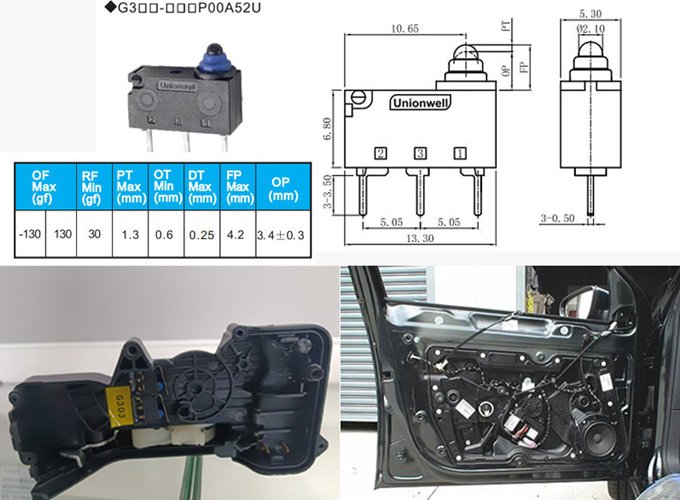
A power-seat control must translate the driver's intended direction into a repeatable electrical command while fitting the seat-side trim, connector and mechanical package. Start the switch review with the control function, then define the installation and circuit together.
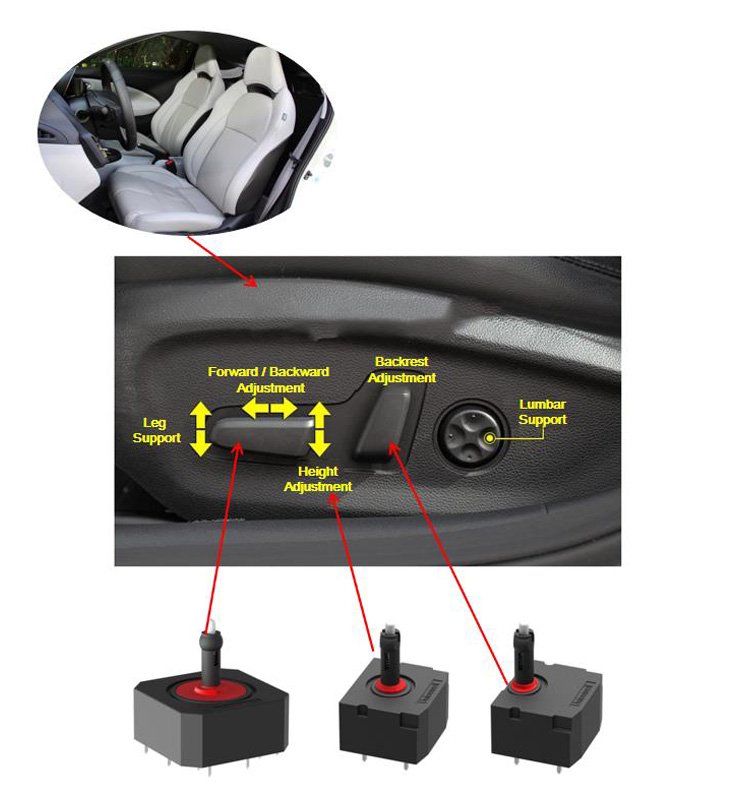
Define the control directions
List the seat motions the user can command: fore-and-aft movement, backrest adjustment or a multi-direction comfort function. Document the actuator movement and expected electrical state for each direction, including the neutral state and release. A seat-control assembly may switch a motor circuit or provide an input to a control module; confirm the actual circuit before choosing contacts or terminals.
For a G19 platform review, provide the required number of control directions, the user-facing actuator interface and the available mounting envelope. Mechanical travel limits and seat-latch confirmation require their own defined sensing positions in the equipment design.
Review the installation as an assembly
| Design input | What to check with engineering |
|---|---|
| Actuator and feel | Direction, return behaviour, operating force and trim interference across the tolerance range. |
| Mounting and connection | Clip or fixing datums, connector orientation, harness routing and assembly access. |
| Electrical interface | Motor or module circuit, normal current, inrush, switching sequence and contact requirements. |
| Environment | Temperature, vibration, contamination and possible spill or cleaning exposure at the actual location. |
Validate the final configuration
Use the production-intent seat trim and mechanism for fit and feel evaluation. Check that operating and release positions remain distinct when the tolerance stack is varied. Verify the circuit during actuation, release and repeated operation, then complete the electrical and environmental tests required by the vehicle program.
A sealing label, family-level life figure or published application picture does not establish approval for every actuator and terminal combination. Confirm the exact ordering code, controlled drawing revision and applicable test evidence with the project team.
Prepare a focused OEM request
Send the seat-control function map, packaging drawing, connector information and circuit diagram. Include the project stage, expected annual quantity, target validation schedule and incumbent part number when available. Review the G19 product platform and use the application request below to keep the seat-control context with your inquiry.
Ratings and dimensions depend on the exact configuration. Request the current controlled datasheet, drawing revision, and validation requirements before design approval.