Automotive-grade sensing and interlock solutions for vehicle controls and mechanisms.
Vehicle programs require disciplined review of temperature, vibration, sealing, travel, packaging, electrical load, and validation requirements.

Application engineering
-40°C to +150°C application range, vibration resistance, IP67 / IP68 options
Get a recommendation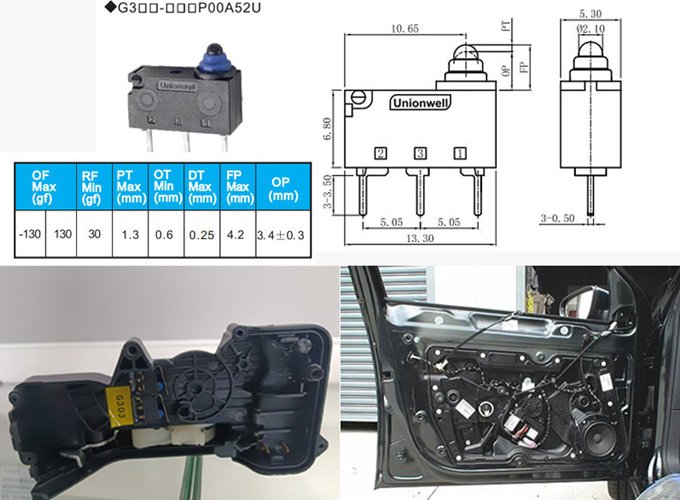
Automotive-grade sensing and interlock solutions for vehicle controls and mechanisms.
Vehicle programs require disciplined review of temperature, vibration, sealing, travel, packaging, electrical load, and validation requirements.
Product in the application
Representative mechanisms and sensing points for engineering teams. The series shown are starting points; confirm the exact model, rating, environment, and validation requirements with Unionwell.
Detect open, closed, or latched states so the vehicle control system can receive a clear mechanical position signal.
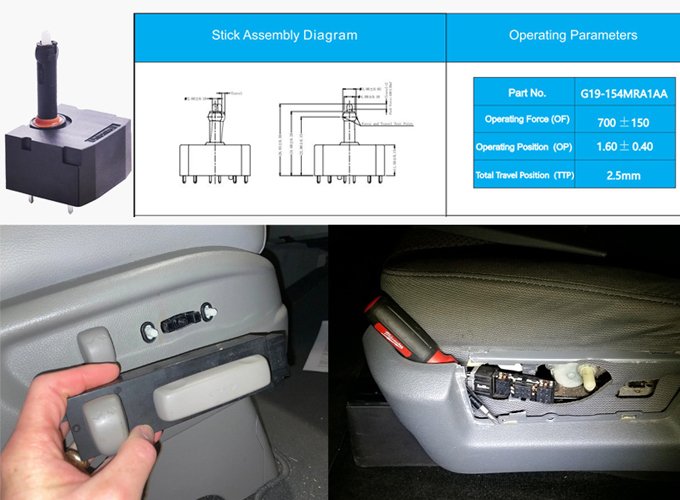
Provide position or end-of-travel feedback inside compact seat adjustment mechanisms.
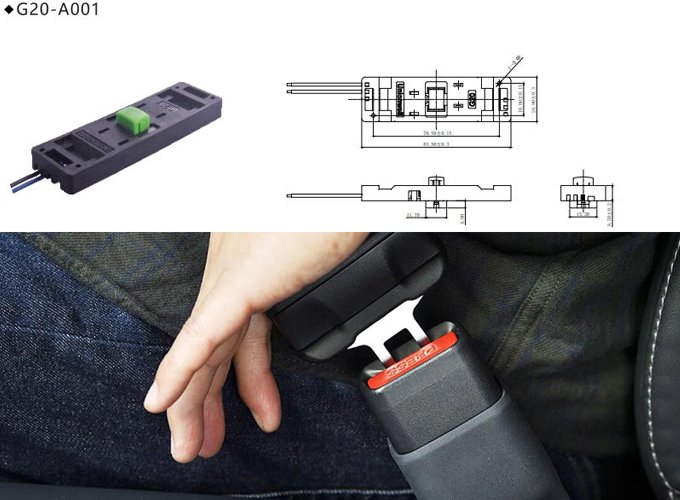
Detect buckle engagement as an input to the vehicle reminder system.
Sense a lever or moving cabin mechanism at defined positions within a constrained package.
Report flap or latch position where the mechanism is exposed to dirt, moisture, or vibration.
Starting platforms
G303R, G19, G20, G23A/B/L, G25/G26, G307A/B, G9, G22 OEM
Recommendations are a starting point only. Final selection requires the mechanism, load, environment, approvals, quantity, and validation plan.Browse product platformsEngineering answers
Use these checks to prepare a clear micro switch RFQ. Final selection depends on the exact assembly and validation requirements.
Common sensing points include door and liftgate latches, power-seat travel, seat-belt buckle status, gear selectors, and fuel or charging flaps. The switch usually reports a mechanical state to the vehicle control system; the vehicle design owner must validate the final functional and electrical architecture.
Describe the mechanism, movement and operating position; circuit load and voltage; actuator and terminal constraints; temperature, moisture, dust and vibration; expected operating life; required approvals; annual volume; and validation or quality requirements.
No. The listed series are starting points for technical evaluation, not a guarantee of fit or certification for a vehicle program. Confirm the exact model, ratings, samples, environmental limits, and system-level validation plan with Unionwell engineering.
Application inquiry
Tell us what the switch detects or controls, how it is actuated, and the operating environment.