Product selection context
Start with the mechanism.
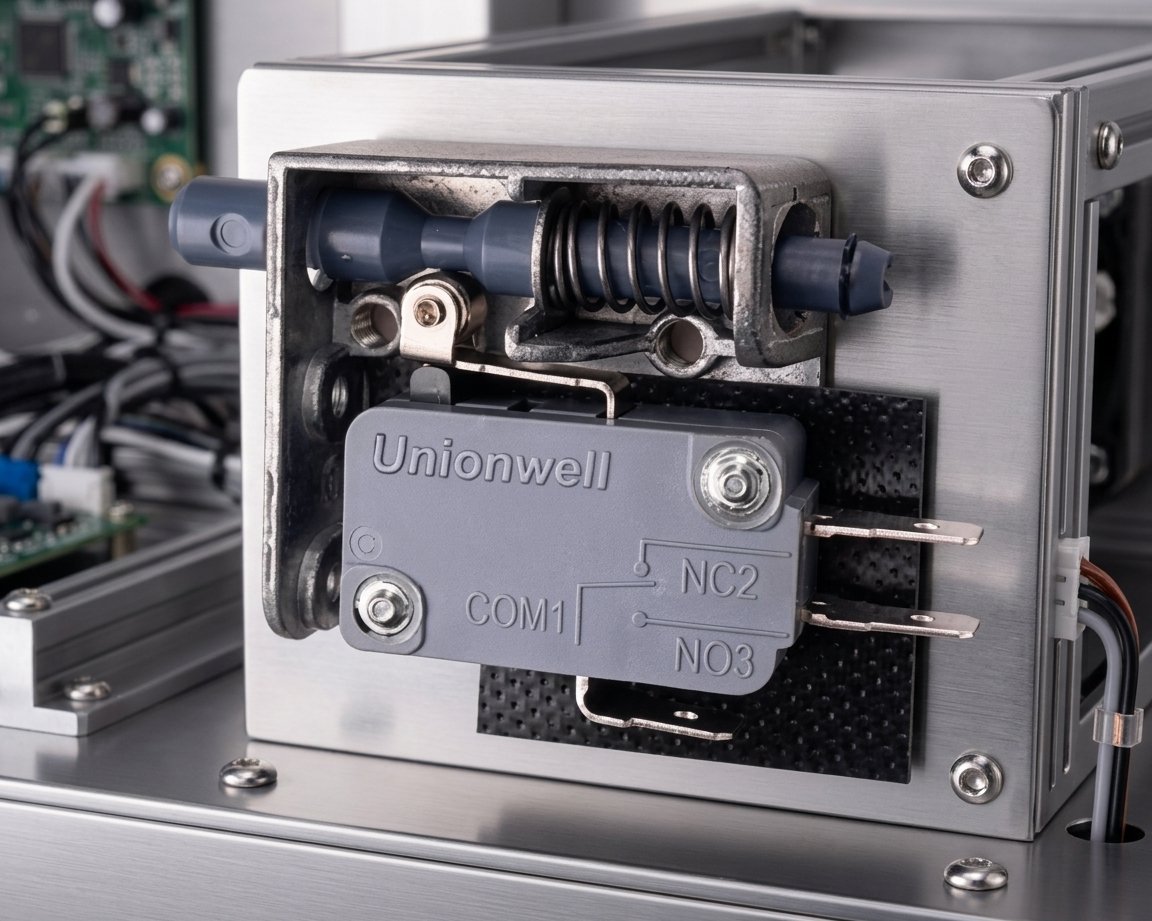
Unionwell manufactured 4 pin push button micro switch that can be widely used in industrial control. This type of 4 pin push button micro switch has double-break DPDT circuit and can work between -30°C and 65°C. This 4 pin push button micro switch has tight construction and minimal contact space. RFQ now if you want to know Unionwell 4 pin micro
Use this page as an on-site starting point, not as a substitute for a controlled drawing or model-specific datasheet. Final selection depends on the actual switch position, movement, circuit, operating environment, and validation plan.
Typical operating points to review
Machine guard and access door
Provide a position input for a cover, guard, or access door within a machine control sequence.
Discuss this positionConveyor and machine travel limits
Signal an end position or travel limit on a moving mechanism.
Discuss this positionProduction-line station position
Confirm that a fixture or machine element has reached a defined point before the next operation.
Discuss this positionValve and actuator status
Report a mechanical end position for an actuator or valve mechanism to the control system.
Discuss this positionThese are application examples for project discussion. Confirm the exact configuration, ratings, approvals, and system-level suitability with Unionwell engineering.
Four checks before you shortlist a switch
- Define the signal. Identify the position or event the mechanism must detect, including normal, released, and fault states.
- Map the movement. Share actuator type, available travel, operating force, mounting envelope, terminal direction, and tolerance stack.
- Specify the conditions. State voltage, current and load type, switching frequency, temperature, moisture, dust, vibration, and expected operating life.
- Plan validation and supply. Include required approvals, sample and test expectations, annual volume, project stage, target timing, and drawing revision.
Send a drawing, mechanism photo, or incumbent part number with your RFQ when available. The team can then check the mechanical interface and electrical requirements together.